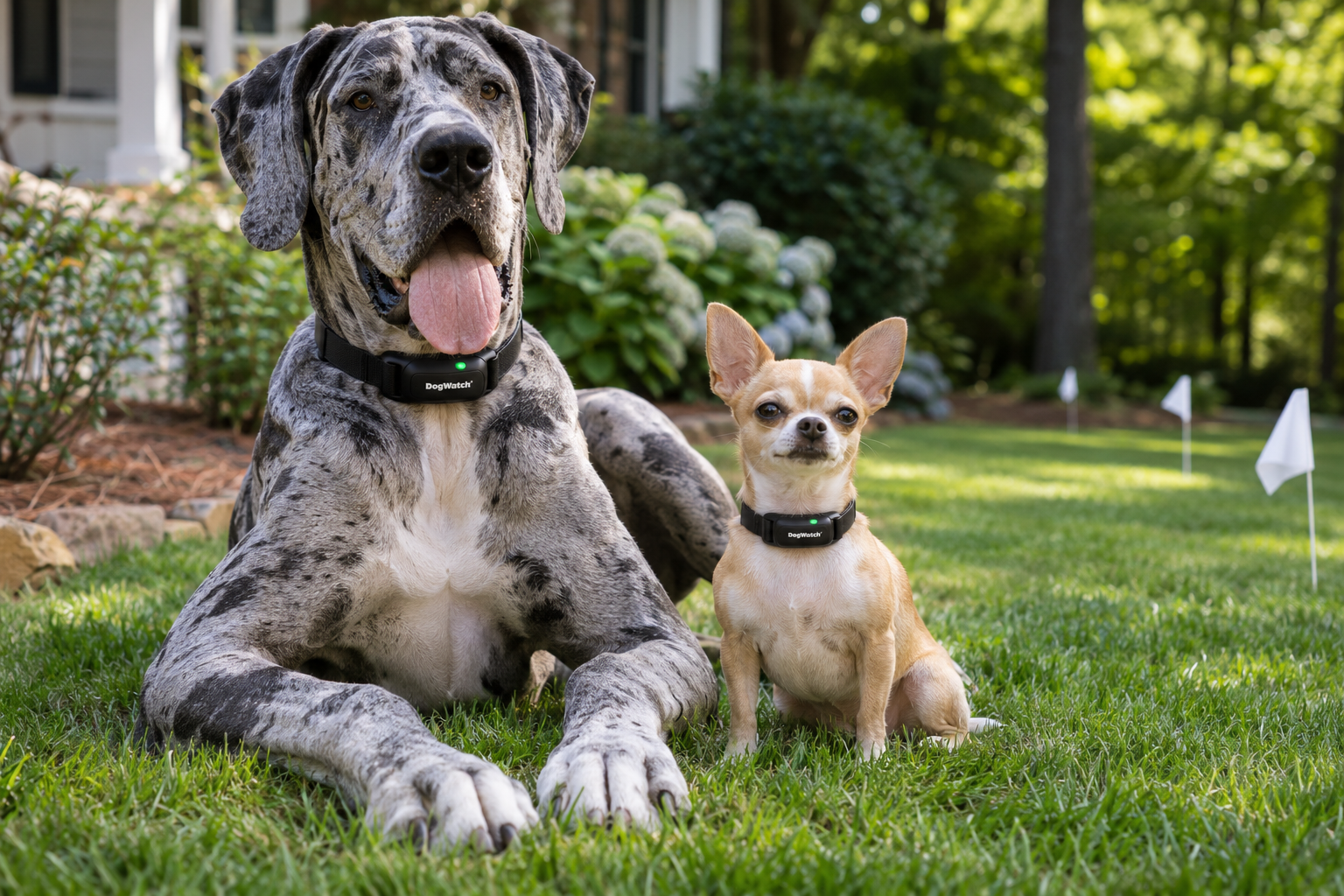
Anyone who's shared a couch with both a Great Dane and a Chihuahua knows they might as well be different species. One weighs as much as a middle schooler and can clear a four-foot fence from a standstill. The other fits in a tote bag and considers a brisk wind a personal attack. So when homeowners hear that a hidden dog fence for all dog sizes exists, the skepticism is fair. How can the same
outdoor hidden fence system contain a 150-pound dog with a prey drive and a 6-pound dog with the bone density of a songbird?
The short answer: it can, and it does, every day across North Georgia. The longer answer is worth understanding before you buy, because the "how" is exactly what separates a professionally installed hidden fence from the DIY kits collecting dust in garages.
Why "One Size Fits All" Is the Wrong Question
There's an old saying that one size fits all, and most of us have learned the hard way that it usually means one size fits nobody. A ball cap, maybe. A dog containment system? That would be a problem.
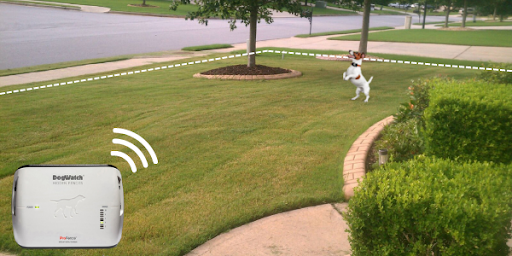
Here's the thing, though: a hidden fence was never one-size-fits-all to begin with. The buried boundary wire is the same whether you have a Mastiff or a Maltese. It's just a signal loop around your property. Everything that actually interacts with your dog (the correction level, the signal field, the training) lives in the collar and the setup, and those are adjusted for each individual dog.
So the real question isn't whether one fence can handle both breeds. It's whether the collar on each dog's neck is programmed for
that dog. That's where quality of equipment and quality of installation start to matter a lot.
Fence Fact: The boundary wire in a hidden fence carries a radio signal, not a shock. The collar receiver is what responds to the signal, which is why two dogs on the same wire can have completely different correction settings.
A Hidden Dog Fence for All Dog Sizes Works at the Collar, Not the Wire
Modern collar receivers offer a wide range of adjustable stimulation levels, from a vibration or faint tickle up to a firm correction a determined Lab will actually respect. Each collar is programmed independently. Your Great Dane's collar can sit several levels higher than your Chihuahua's, and neither dog ever knows the difference.
The signal field is adjustable too. That's the invisible "warning zone" extending from the buried wire, where the collar beeps before any correction happens. A long-legged runner needs a wider zone because he covers ground fast; a small dog trotting along at knee height can work with a tighter one. A professional installer tunes both during setup based on your yard and your dogs.
Trainer's Take: Most dogs, regardless of size, learn the boundary from the warning beep and flags, not the correction. A well-trained dog may go months without ever reaching the correction zone. The goal is a dog who turns back at the beep.
What Big Dogs Need from a Hidden Fence
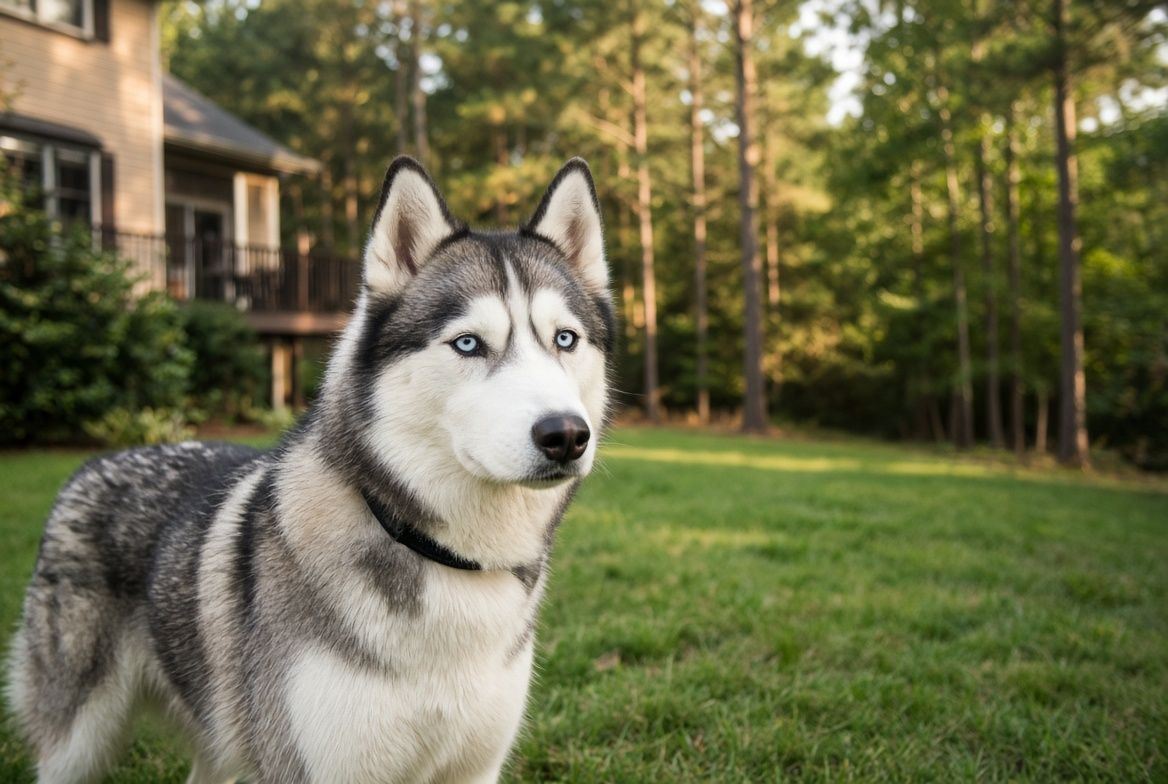
Large breeds bring two challenges: momentum and motivation. A Great Dane at full sprint covers a lot of yard in about a second, so the system needs to react instantly and the warning zone needs enough width to give him time to change his mind. Strong-willed large breeds (huskies, hounds, anything with a working drive) may also test a boundary in ways a lapdog never would, so the collar needs enough range at the top end to stay convincing when a squirrel makes its case.
Battery life matters more than people expect here, too. A big dog outside for hours a day drains a cheap collar fast, and a dead battery on an 80-pound escape artist isn't a hypothetical problem.
Fence Fact: Fast-reacting collar technology matters most for big dogs. If a receiver takes even a half-second too long to respond, a sprinting large breed can be through the signal field before the correction registers.
What Small Dogs Need from a Hidden Fence
Small dogs flip the equation. The concern isn't containment strength; it's comfort and proportion. A collar receiver that feels like nothing on a Bernese Mountain Dog can feel like a brick on a Yorkie, so lightweight receiver options matter. Correction levels should start gentle enough that the lowest settings are appropriate for a 5-pound dog, and training sessions should be shorter, since small breeds tend to hit their stress threshold sooner.
There's also a safety angle people miss: small dogs arguably need a hidden fence
more than big ones. They slip through gaps in traditional fencing, they're targets for hawks and coyotes in parts of North Georgia, and they're harder for drivers to see. A properly fitted hidden fence keeps them in the yard without giving them a fence line to squeeze under.
Trainer's Take: For toy breeds, we start at the lowest possible setting and only move up if the dog ignores it. The right level is the one your dog notices and respects, and nothing more. Bigger is never the goal.
One Wire, Two Very Different Dogs
This is where the multi-dog household wins. You bury one boundary wire, and every dog in the family wears a
collar programmed for their size, age, and temperament. Adding a second (or third, or fourth) dog to the system just means adding a collar. There's no second fence, no separate zones to manage, no re-trenching the yard.
Training is handled per dog as well. This is how Atlanta DogWatch approaches every multi-dog installation: the technician fits each collar individually, sets levels for each dog, and walks each one through their first boundary training session separately, because a confident Dane and a cautious Chihuahua should never be trained side by side on day one. It's also why their collar receivers, with a two-year battery life and fast-reacting FM signal technology, hold up for households where "the dogs" means a pack, not a pet.
From the Install Crew: On multi-dog installs, we train the boldest dog first. Once the confident one respects the boundary, the cautious one usually follows their lead within a session or two. Dogs learn from each other faster than they learn from us.
The Bottom Line for Mixed-Size Households
If your household runs the full spectrum from horse-sized to hamster-sized, a
hidden fence doesn't just handle it. It's arguably the best containment option you have, because the customization happens per dog rather than per yard. The wire defines where the boundary is. The collars, the settings, and the training define what that boundary means to each dog. Get those dialed in by a professional, and the Dane and the Chihuahua end up equally convinced the yard has walls.
Frequently Asked Questions
What's the best hidden dog fence for all dog sizes?
The best hidden dog fence for all dog sizes is one with independently programmable collar receivers, a wide range of correction levels (including settings gentle enough for toy breeds), and lightweight collar options. Professional installation matters just as much as the equipment, since the signal field width and each dog's training plan should be tailored to your specific yard and dogs, not pulled out of a box.
Do I need a separate hidden fence for each dog?
No. One buried boundary wire serves every dog on the property. Each dog wears their own
collar receiver, programmed independently for their size and temperament, so a new dog only ever means a new collar and a round of boundary training, not a new installation.